South Indian Food Is Having Its American Moment — And It's About Time
For decades, if you walked into an Indian restaurant in the United States, you were probably reading a menu built around the same dozen dishes: butter chicken, saag paneer, chicken tikka masala, naan. All delicious. All from the North.
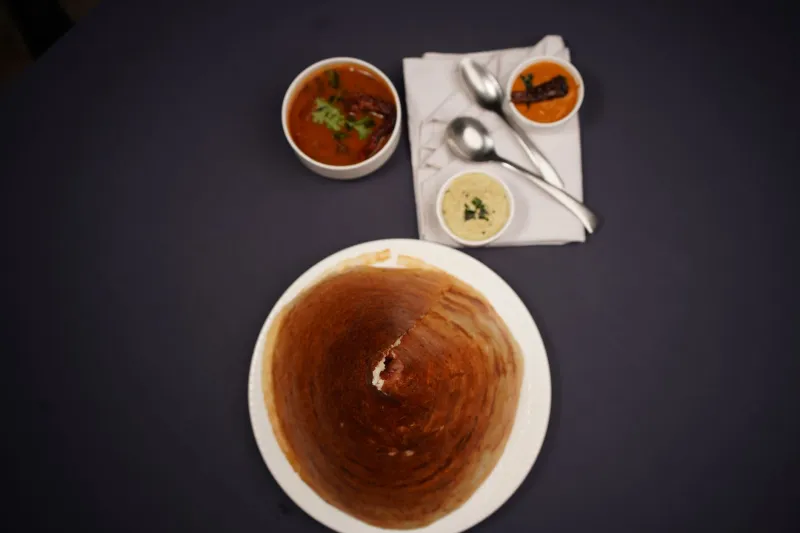
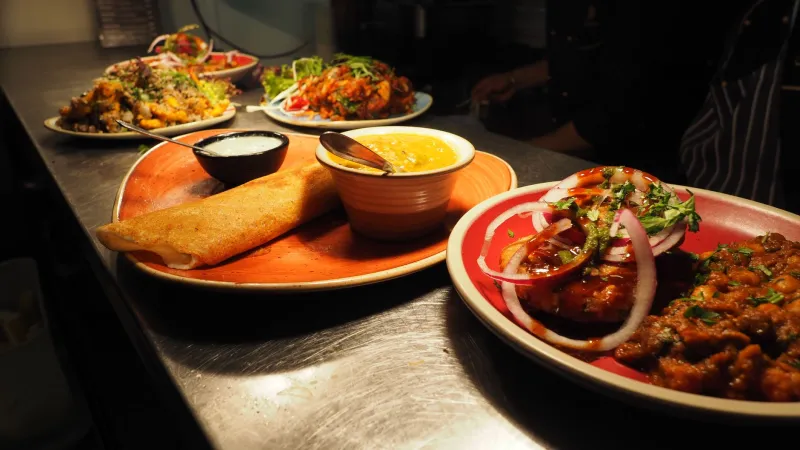
South Indian food — the dosas, the chettinad curries, the filter coffee, the coconut-forward gravies of Kerala — was largely invisible to mainstream American diners. You could find it if you knew where to look, usually tucked into a strip mall near a university or in a neighborhood with a sizable South Asian population. But it wasn't on the radar of food media, wasn't being celebrated in the same breath as other global cuisines, and certainly wasn't showing up on the kind of menus that get written about in the New York Times food section.
That's changing. Fast.
The Numbers Tell a Story
Industry data from the past three years points to a clear shift. The number of South Indian specialty restaurants in major US cities — New York, Los Angeles, Chicago, Houston, the Bay Area — has grown significantly, with newer openings in cities that previously had little to no representation, including Nashville, Denver, and Austin.
On social media, the signals are equally clear. Search "dosa" on TikTok or Instagram Reels and you'll find millions of views on content ranging from home cooks showing off their batter fermentation process to food influencers losing their minds over masala dosa for the first time. The hashtag #SouthIndianFood has accumulated hundreds of millions of impressions across platforms, with engagement skewing younger and geographically diverse — meaning it's not just the diaspora watching.
Google Trends data shows sustained upward movement in searches for "idli recipe," "sambar recipe," and "what is dosa" over the past five years, with notable spikes following food media coverage and viral social content.
This isn't a blip. It's a build.
Why Now? Several Forces at Work
The timing of South Indian food's American breakthrough isn't random. A few distinct factors are converging.
Regional Indian food is finally getting its due. For years, "Indian food" in America was effectively a proxy for Punjabi and Mughlai cuisine — the food of North India. That's partly historical (many early Indian immigrants to the US came from the North), partly commercial (those flavors were easier to adapt for a broader audience), and partly a function of who was opening restaurants and who was writing about them.
But as the Indian American community has grown and diversified — the US is now home to over 4.4 million people of Indian origin — so has the demand for representation. Tamil, Telugu, Malayali, and Kannada communities have grown large enough in cities like Fremont, Sunnyvale, and Sugar Land to support restaurants that don't need to compromise on authenticity. And those restaurants are getting noticed.
A new generation of diaspora entrepreneurs is telling better stories. This might be the most important factor. A wave of second-generation South Indian Americans — people who grew up eating these foods at home but also grew up fluent in American food culture — are opening restaurants, launching food brands, and creating content that bridges both worlds.
They know how to talk about chettinad pepper chicken in a way that makes a non-Indian food enthusiast genuinely curious. They understand that context and storytelling are part of the product. And they're not interested in diluting the food to make it more "accessible" — they're betting that the real thing is what people actually want.
Plant-based eating has been a surprising catalyst. South Indian cuisine is, almost by default, one of the most naturally plant-forward food traditions in the world. Lentils, vegetables, rice, coconut — these are the building blocks. Dishes like sambar, rasam, kootu, and avial are deeply satisfying and entirely vegan. As plant-based eating has moved from niche to mainstream in the US, South Indian food has benefited from a growing audience that's actively looking for flavorful, filling meatless options that aren't just salads.
Food media is catching up. Publications like Eater, Bon Appétit, and the Los Angeles Times have run substantial features on South Indian cuisine in recent years. Chef-driven South Indian restaurants have appeared on Michelin Bib Gourmand lists. The James Beard Foundation has recognized South Indian chefs and restaurateurs. When food media validates a cuisine, it creates permission for a broader audience to engage with it — and that's been happening in a real way.
What Authentic Actually Means Here
One of the most interesting tensions in this moment is the question of authenticity. As South Indian food gets more mainstream attention, there's an inevitable pressure to simplify, to soften, to make it "approachable."
The diaspora entrepreneurs leading this wave are largely pushing back against that instinct. The argument — and we agree with it completely — is that the food doesn't need to be modified. What it needs is better storytelling and better access.
A first-time diner doesn't need a dumbed-down version of chettinad chicken. They need to understand what they're eating, why the black pepper is so prominent, what region it comes from, and why it's been made this way for generations. Context transforms curiosity into appreciation.
This is exactly why we built Padappai Brothers around education as much as recipes. The food speaks for itself when people know how to listen.
What's Next
If the trajectory continues — and there's every reason to think it will — South Indian food is on a path that Korean food, Japanese food, and Mexican food have already traveled in the US: from ethnic enclave specialty to genuine mainstream staple.
We're already seeing the early signs of that transition. Dosa is appearing on menus at non-Indian restaurants. Coconut chutney is being stocked at Whole Foods. Filter coffee, with its slow drip and intense flavor, is being discovered by the specialty coffee crowd.
For those of us who grew up eating this food, there's something genuinely exciting about watching the rest of America catch on. Not because we needed the validation — the food has always been extraordinary — but because more people getting to experience it is simply a good thing.
At Padappai Brothers, we've always believed that South Indian food isn't a hidden gem waiting to be discovered. It's a fully realized, deeply sophisticated culinary tradition that just hasn't had the right platform yet.
Consider this the platform.