The Ritual in the Cup: Making South Indian Filter Coffee at Home in America
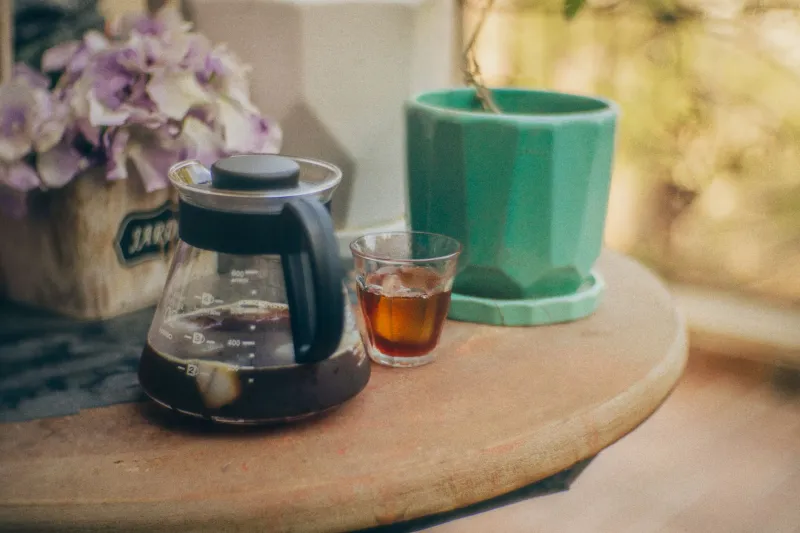
American coffee culture is having an identity moment. Cold brew, pour-over, single-origin espresso, mushroom coffee, canned lattes — the options have never been more overwhelming or more specific. And somewhere in the middle of all that noise, a much older, quieter tradition is finding its audience.
South Indian filter coffee — called kaapi in Tamil, brewed in a simple two-piece stainless steel filter that looks almost comically low-tech next to a $400 Chemex setup — is showing up in diaspora kitchens, specialty coffee conversations, and South Indian restaurants across the country. Not because it's trendy in the way that oat milk lattes are trendy, but because people who know it can't stop thinking about it, and people who discover it for the first time often don't go back.
At Padappai Brothers, this is personal. Kaapi isn't a menu item for us. It's the drink that existed before breakfast, the one that meant the morning was starting, the one that came in a small stainless steel tumbler nested in a wide, flat cup called a davara. If you know, you know.
What Makes South Indian Coffee Different
Let's start with what it isn't. It's not instant coffee. It's not French press. It's not espresso, though the brew concentration is closer to espresso than to drip coffee. It's also not flavored or sweetened with syrups — the sweetness in kaapi comes from whole milk and sometimes a small amount of sugar, added in proportions that are, in traditional households, a matter of serious personal preference and occasional household debate.
The brewing method is a slow, gravity-based percolation through a stainless steel filter device. The coffee grounds sit in an upper chamber with a perforated disc pressing down on them. Hot water is added, and over the course of 15-20 minutes, a thick, dark decoction drips into the lower chamber below. This decoction is intensely concentrated — you wouldn't drink it straight. It gets mixed with hot milk to create the final cup.
The coffee blend used in South Indian filter coffee is typically a mix of dark-roasted Arabica and a small percentage of roasted chicory. The chicory is important. It adds a slight bitterness and a woody, caramel-like depth that distinguishes kaapi from any other coffee you've had. Without it, you get strong coffee. With it, you get kaapi.
The Equipment You Actually Need
The South Indian coffee filter is a two-piece stainless steel device available at virtually every Indian grocery store in the US and easily ordered online. It's inexpensive — usually between $10 and $20 depending on size — and requires no electricity, no paper filters, and no maintenance beyond rinsing. It comes in different capacities; a 3-cup filter is a good starting size for home use.
You'll also want a davara-tumbler set if you want the full experience. The tumbler is a small stainless steel cup that holds the coffee. The davara is the wider, shallow vessel it sits in. The combination is designed for the pour — more on that in a moment. These sets are widely available online and at Indian grocery stores, often sold together.
That's genuinely all you need. No grinder settings to calibrate, no bloom timers, no thermometers. The simplicity of the equipment is part of what makes kaapi so appealing once you get into it.
The Coffee Blend
Finding the right coffee is the most important step, and this is where American home cooks sometimes struggle because standard drip coffee blends don't work the same way.
Look for pre-blended South Indian filter coffee powder at Indian grocery stores. Brands like Narasu's, Leo Coffee, and Cothas are widely trusted and available in many Indian grocery stores across the US, or through online retailers. These blends typically contain 70-80% coffee and 20-30% chicory, and they're ground specifically for the filter method — finer than drip, but not as fine as espresso.
If you want to experiment with sourcing your own beans, look for dark-roasted South Indian or Karnataka coffee beans and add roasted chicory (available online) at roughly a 4:1 or 5:1 coffee-to-chicory ratio. But honestly, starting with a pre-blended powder from a reputable brand is the fastest path to a good cup.
Brewing the Decoction
Place 3-4 tablespoons of coffee powder into the upper chamber of the filter. Press the perforated disc down firmly on top of the grounds. Boil water and let it sit for about 30 seconds — you want it just off the boil, around 195-200°F, not a rolling boil.
Pour the hot water slowly over the grounds, filling the upper chamber. Put the lid on. Walk away for 15-20 minutes.
What drips into the lower chamber is your decoction — dark, thick, aromatic. A standard serving uses about 2-3 tablespoons of decoction mixed with roughly ¾ cup of hot whole milk. The ratio is adjustable based on how strong you like it, and this is something every kaapi drinker has an opinion about.
The Pour: Where the Ritual Lives
Here is where South Indian coffee becomes something more than just a brewing method.
The signature technique — the thing that makes kaapi visually and texturally distinct — is the pour-and-blend. You pour the coffee mixture back and forth between the tumbler and the davara, lifting the tumbler high to create a long, arcing stream. You do this repeatedly, maybe 10-15 times, until the coffee is frothy and the temperature is slightly cooled to a comfortable drinking temperature.
This isn't showmanship. It serves a real purpose. The repeated pouring aerates the coffee, creates a foam layer on top, and blends the milk and decoction more thoroughly than stirring does. The result is a lighter, frothy cup with a texture that's genuinely different from coffee that's been simply poured and stirred.
In traditional South Indian homes, this pour happens in the kitchen before the coffee is brought to the table. The sound of it — that rhythmic splashing — is as much a part of the morning as anything else. In some households, how high you pour and how good your froth is reflects a certain domestic pride.
Why It's Landing in America Right Now
The diaspora angle is obvious — South Indians who grew up with kaapi and moved to the US have always made it at home. But something is shifting. Specialty coffee culture has created a consumer base that's genuinely curious about brewing methods outside the European and Japanese traditions that have dominated the conversation. Filter coffee, pour-over, cold brew — American coffee drinkers have shown they're willing to invest time and attention into a cup. Kaapi fits that sensibility while offering something entirely new.
South Indian restaurants in cities like Chicago, Atlanta, the Bay Area, and the New York metro area are also starting to feature filter coffee more prominently, sometimes with tableside pours. Once someone sees and tastes it in that context, the curiosity follows them home.
For diaspora communities, it's also a question of accessibility. The equipment is cheap, the ingredients are available, and the technique — once you've done it a few times — is genuinely simple. You don't need a $500 espresso machine to make a cup that tastes like your grandmother's kitchen. You need a $12 stainless steel filter and the right coffee powder.
That's the thing about kaapi. It's always been democratic. And that, maybe more than anything else, is why it travels so well.